30K+
jobs lost to AI in early 2026 alone
That's the Challenger Report's count of US layoffs explicitly attributed to AI, just in the first few months of the year. The curve isn't slowing.
Source · Yahoo FinanceFor parents raising the next builders
Universal HIGH INCOME via checks issued by the Federal government is the best way to deal with unemployment caused by AI. AI/robotics will produce goods & services far in excess of the increase in the money supply.”
The ability to think about what’s impossible. We build that with Mars-grade stories that teach kids to reason from first principles.
In development · Android beta July 2026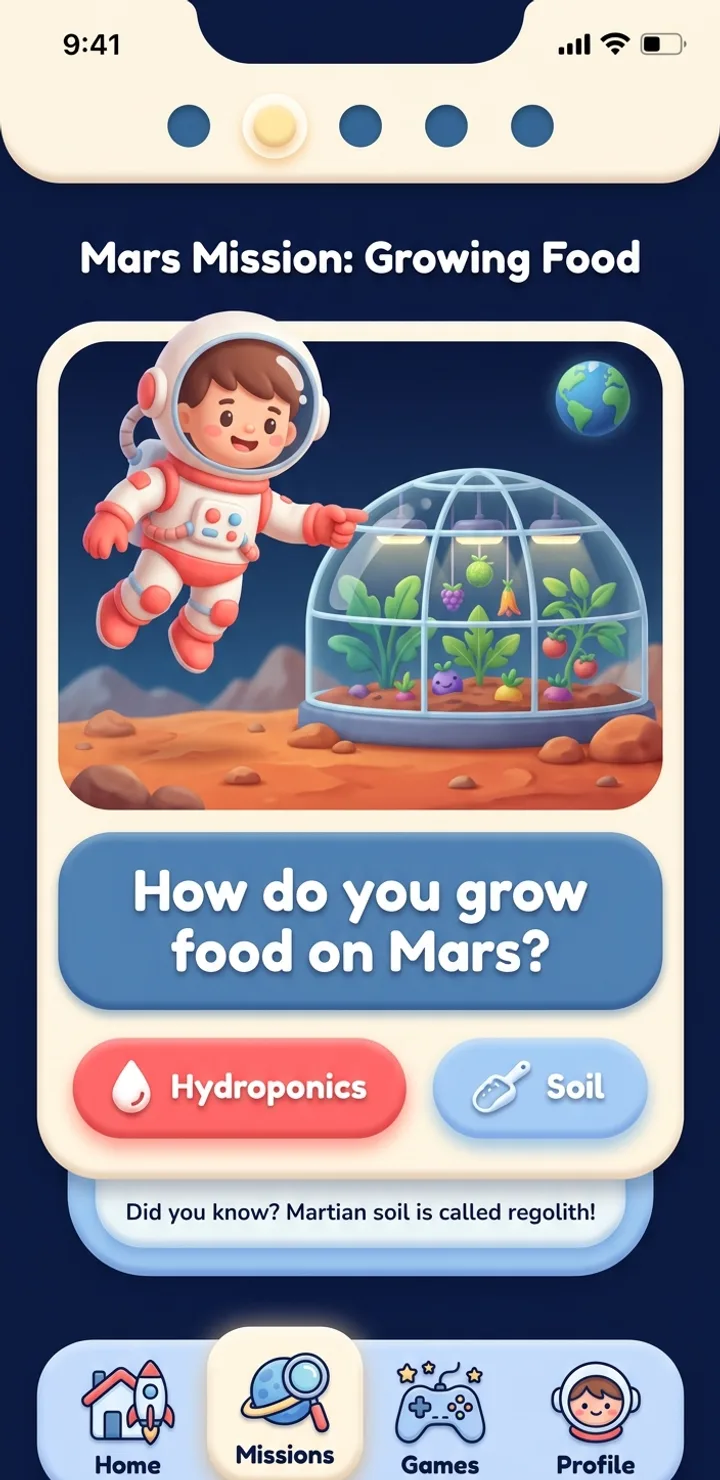
Anoo Kids · in-development product UI
About Anoo
Anoo Intelligence, LLC builds Anoo Kids, a mobile app that teaches children ages 7 to 13 to think from first principles, the one skill AI cannot replace.
Each lesson is an interactive story set on Mars, where extreme constraints force kids to reason about open-ended, real-world problems. Our customers are parents who want their children ready for a world where AI handles the easy work.
Inside the app
A mobile app built with Flutter and Gemini 3.1 Flash Live. The screens below are in-development product UI.
A story is a scroll of shorts. The kid picks what happens next and the story branches on how they reason.
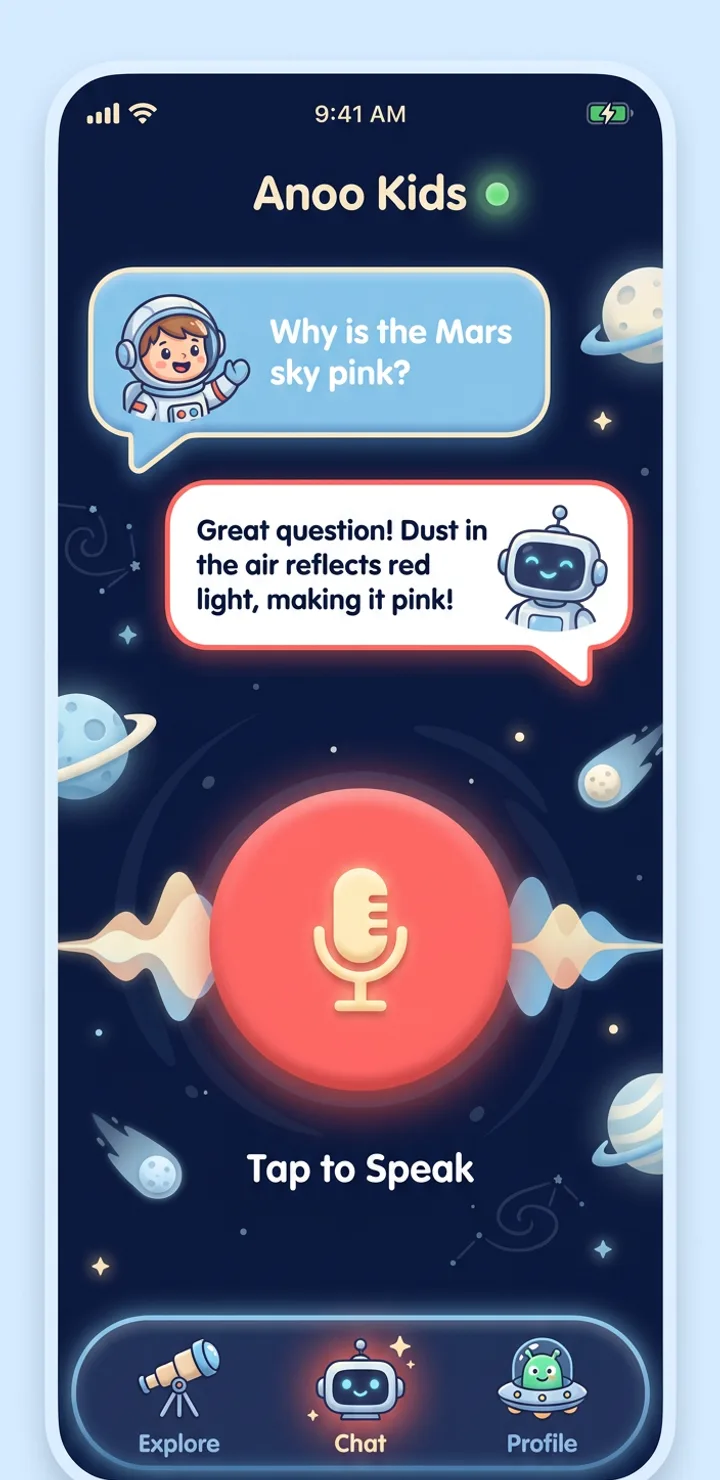
A real-time voice tutor on Gemini Live. The kid asks, the tutor answers, the story responds.
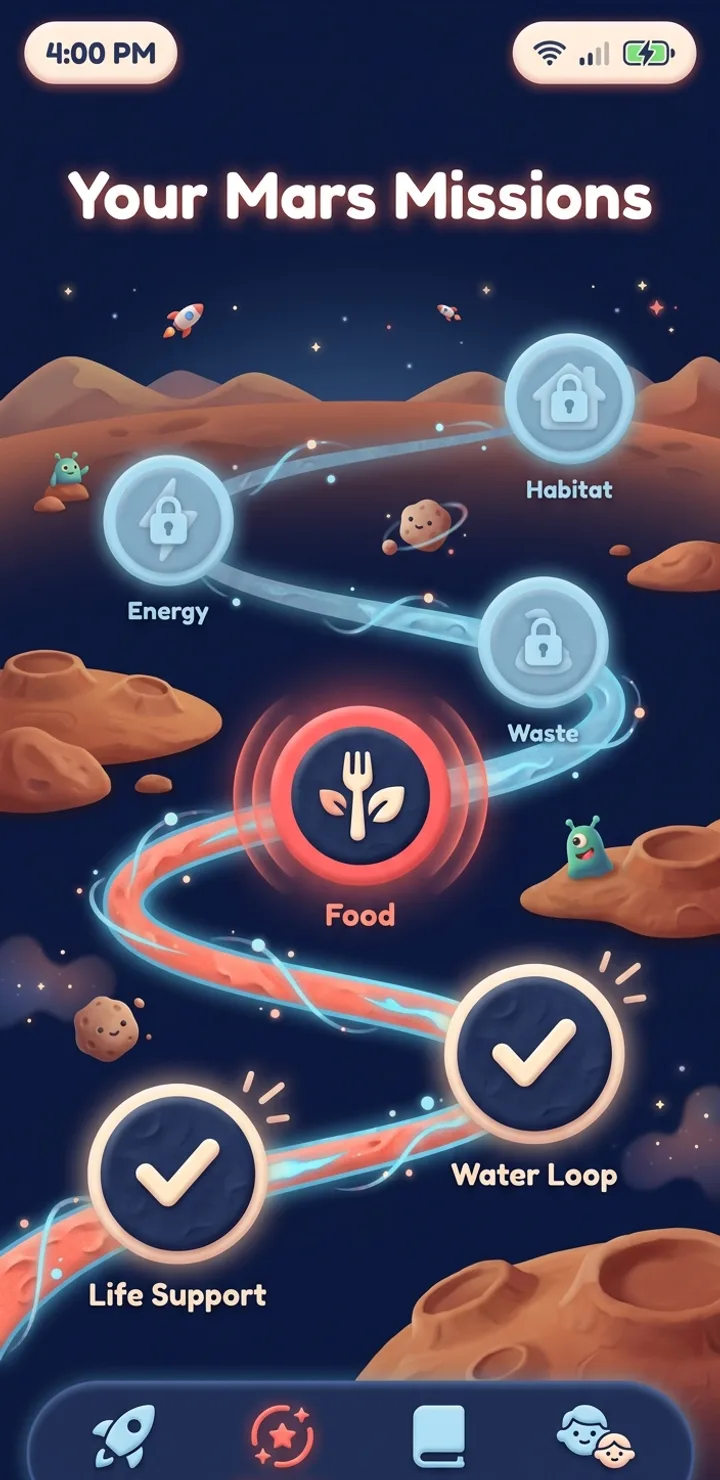
Life support, water, food, waste, energy, habitat. Six missions that teach first-principles thinking.
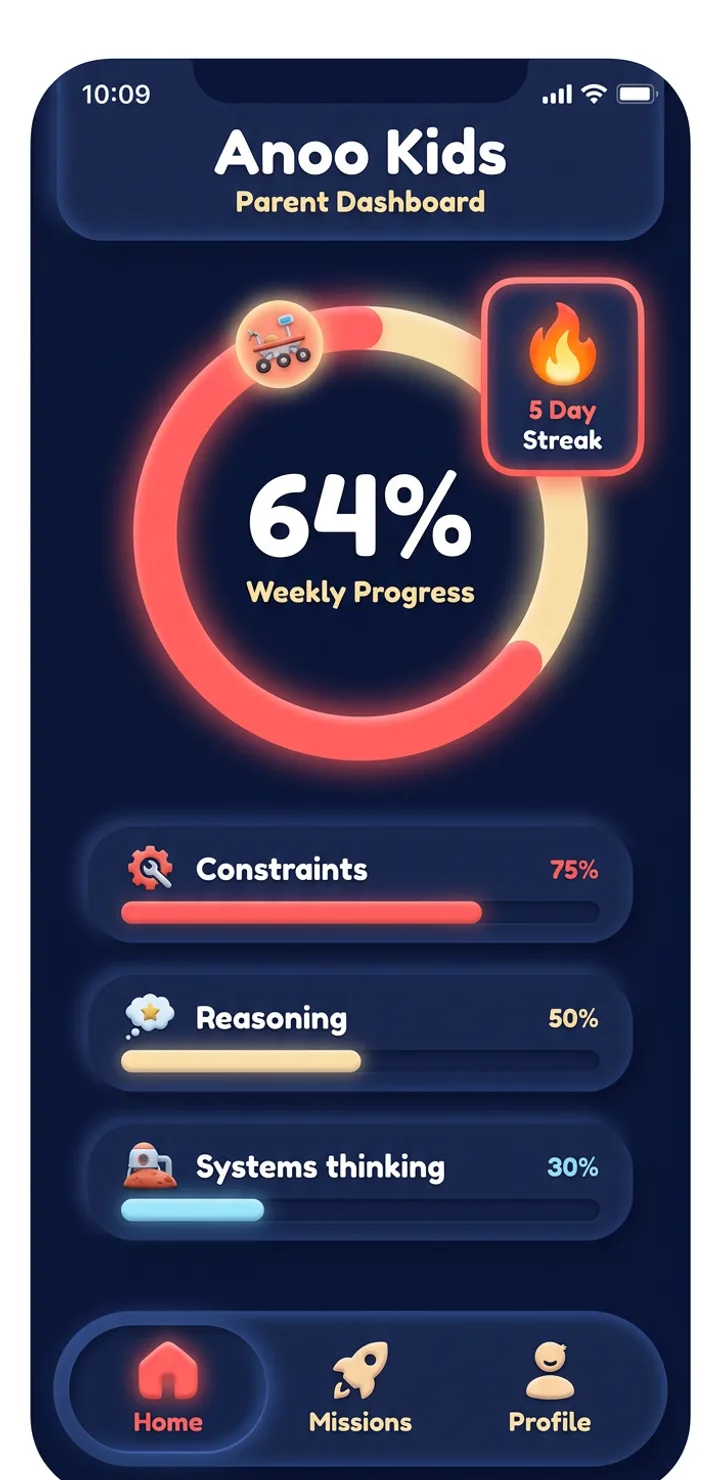
Parents track real reasoning skills, not screen time: constraints, systems thinking, problem solving.
The Shift
When Elon talks about universal high income, he’s saying the obvious thing: most jobs are about to disappear. The people who remain valuable are the ones who can think about problems no AI can hand back an answer for.
That's the Challenger Report's count of US layoffs explicitly attributed to AI, just in the first few months of the year. The curve isn't slowing.
Source · Yahoo Finance"What was easy is now zero. Easy tasks no longer exist. Hard is the new easy, impossible is the new hard."
Source · Micha Kaufman, CEO FiverrThat's the world they're being prepared for. The world schools were designed for ended in 2022. Nobody told the curriculum.
Source · Anoo Intelligence research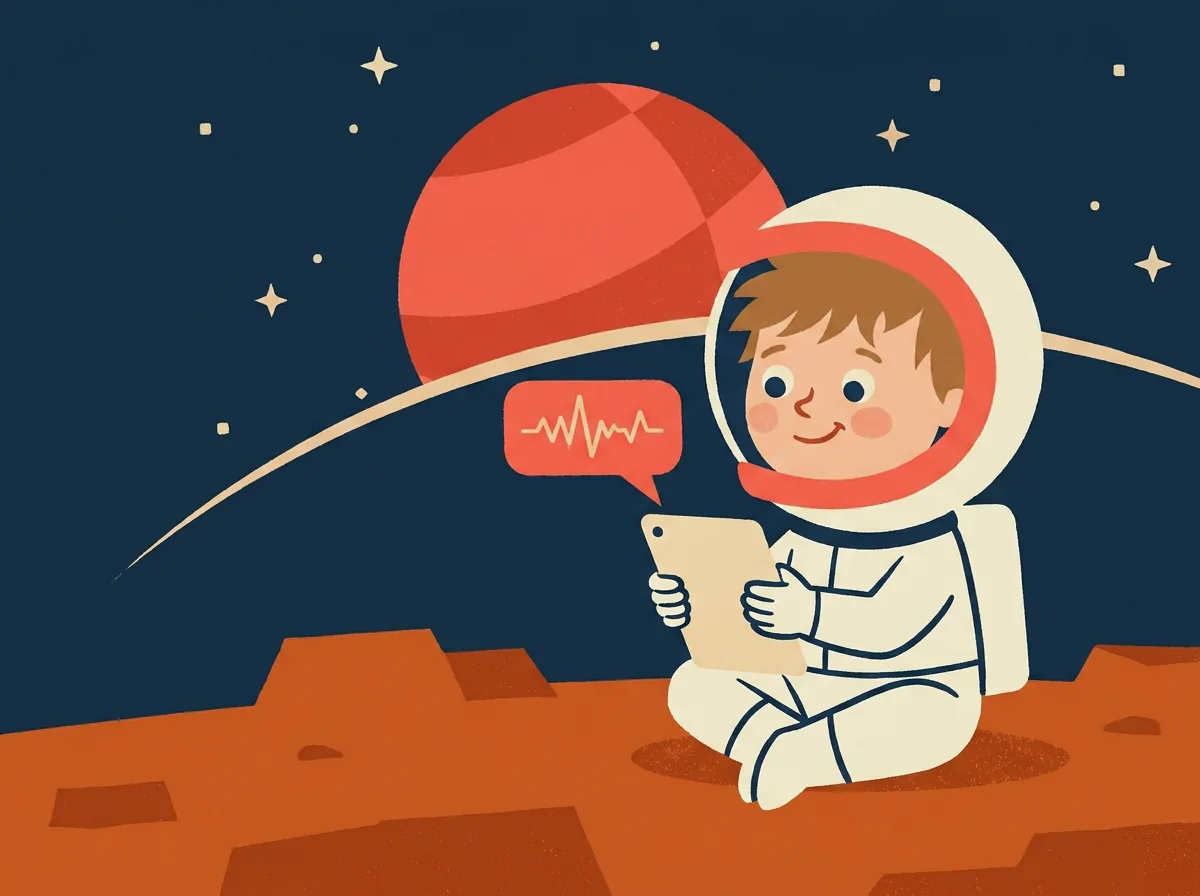
What we build
A story is a scroll of shorts: the same vertical-scroll loop your kid already knows. Except every short teaches one Mars-scale problem, and the story branches based on how they reason. Four formats, one app.
Hand-drawn panels where your kid picks what happens next. The cliffhanger between shorts.
Short narrated scenes. Original animation mixed with real NASA footage.
Drag, sort, build. Active reasoning, not passive watching.
Kid talks back. The tutor answers in voice. The story responds to how they think.
The Method
Every story walks them through the same four-step loop. By the end of it, they don’t just know an answer. They know how to build one. That’s what makes a Mars colonist, a founder, a researcher. That’s what we train.
Because the future they’re inheriting is full of hard problems. The kind that don’t hand back an answer, even to AI.
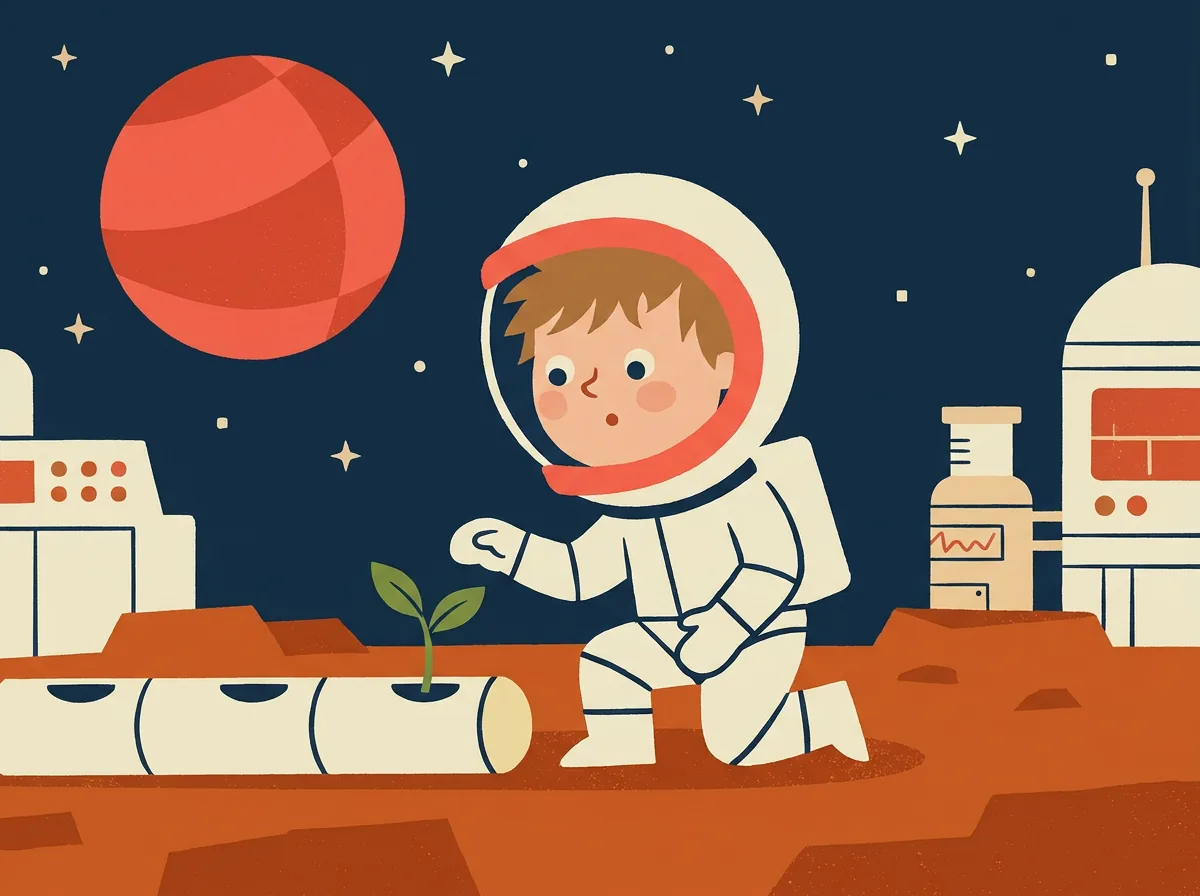
"How do you grow food on Mars?"
No soil. No sunlight. Limited water.
Plants need: light, nutrients, water.
Hydroponics. LEDs. Closed-loop water.
The Curriculum
Grounded in NASA’s Moon-to-Mars Architecture and ECLSS technical briefs. We didn’t make this up. We just turned it into something a 7-year-old wants to swipe through.
These aren’t textbook problems. They’re the texture of the world the next generation will actually live in.
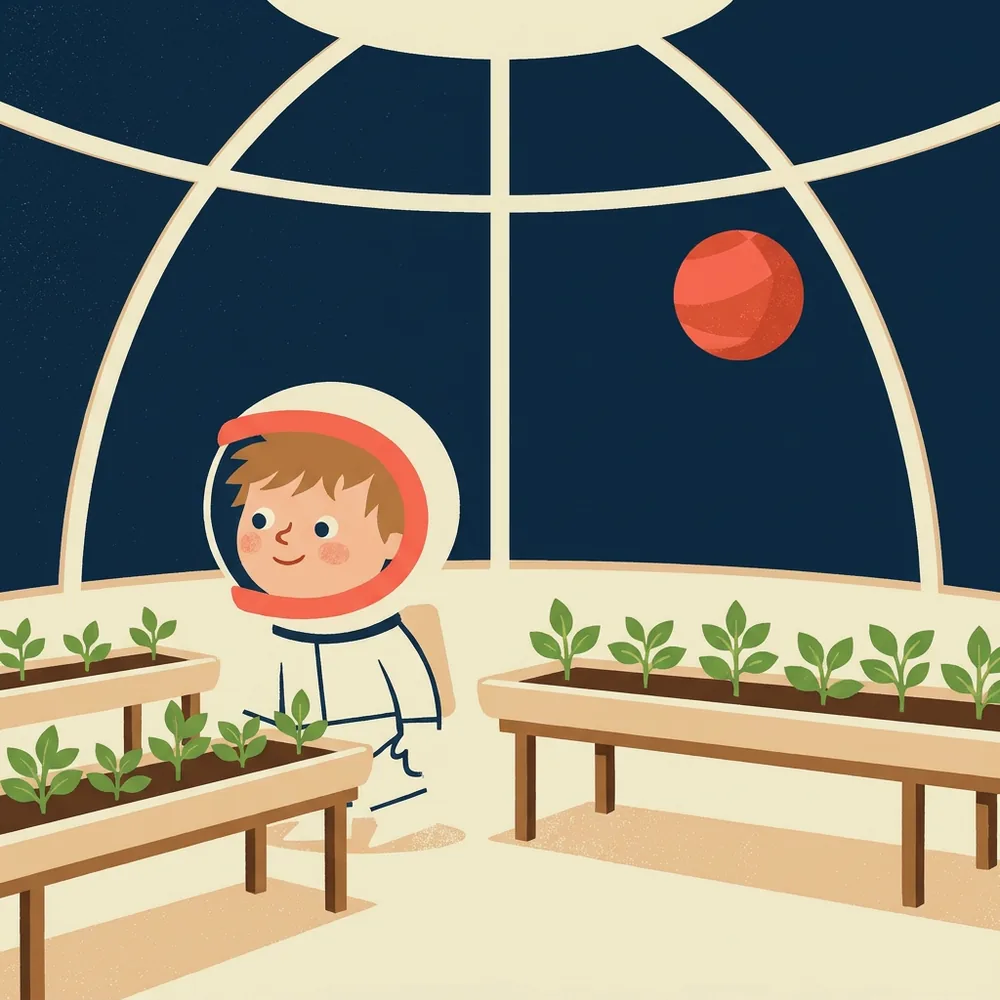
“Why can't you just open the window on Mars?”
“Where does your pee go on Mars?”
“How do you grow lettuce with no soil and no sun?”
“How do you turn your trash into a brick to build with?”
“What if the sun disappears for three months?”
“How do you land a house on a planet with no runway?”
Sourced from NASA’s Moon-to-Mars Architecture and ECLSS technical briefs .
Why Google
Not for the feature list. For the future they’re building. Project Suncatcher is the why.
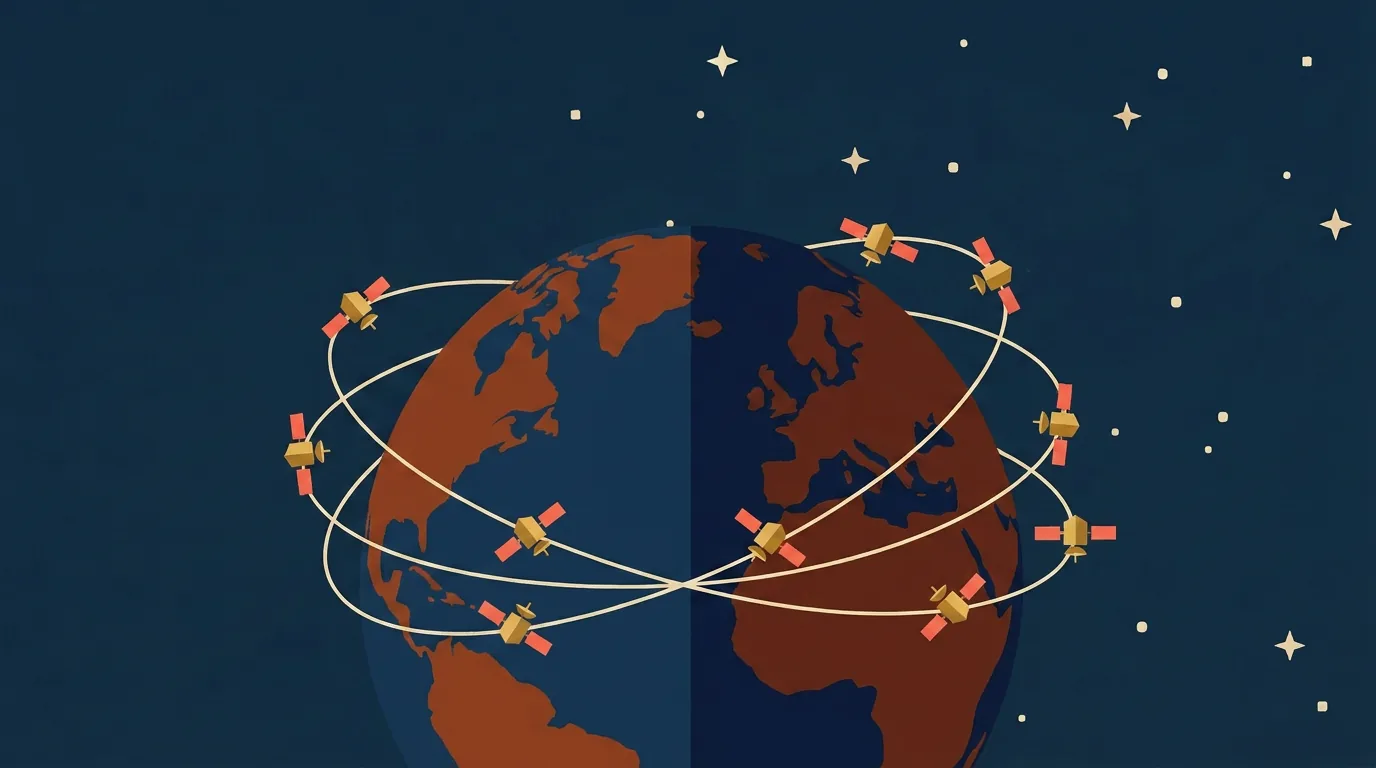
In November 2025, Google announced it’s putting AI compute in orbit. An 81-satellite constellation of TPUs powered by solar panels that work 8× harder in space than on Earth. First two prototype satellites launch early 2027 with Planet Labs.
“Google is solving compute the way our kids will need to solve everything: by going to where the constraints are different.”
Business Model
We intend to run the first kids edtech platform with unit economics tied directly to real-time AI compute. Instead of hiding AI costs, we turn them into a transparent, growing business.
The model
Parents pay a low monthly subscription as a budget anchor, then buy flexible credit packs on top. One credit is designed to equal about one minute of Gemini Live voice or one dynamically generated story.
Why it scales
Most edtech uses flat fees that subsidize AI, so margins shrink as kids use the app more. Anoo passes AI compute through with a fixed markup, so margins are designed to expand with usage and never lose money on a power user.
What it means for Google
Because pricing is metered to Gemini and Vertex AI usage, our revenue is designed to scale in lockstep with our Google Cloud consumption. We intend to grow into a high-volume Google Cloud customer.
Phase 1: pre-generated content keeps early API costs low and margins high. Phase 2: dynamic, real-time generation on Gemini 3.1 Flash Live, Google’s latest real-time audio model, where heavy users fund their own compute through credit packs.
Product & Roadmap
Anoo Kids is a mobile app, currently pre-launch. Here is where we are and what is next.
July 2026 · next
Android closed beta
End of Q3 2026
Public launch on Google Play
Within 60 days of Android
iOS App Store release
Flutter on device, Gemini 3.1 Flash Live (Google’s latest real-time audio model) via Firebase AI Logic, Firestore and Cloud Run. COPPA-2026 compliant; voice retained per session only; no third-party trackers.
The Choice
The future waiting for them is full of hard, impossible problems. That’s the exciting part.
Anoo Kids enters Android beta in July 2026, with public launch later in 2026. Be the first parent to know when it goes live.
We’ll email once, the day it launches. Nothing else.
The Team
Anoo Intelligence, LLC is founded and led by Geeta P. Loke.

Founder, CEO & Lead Engineer
Software engineer and architect with 20+ years building enterprise-scale commerce platforms and modern digital experiences for major global retail and eCommerce organizations. She now builds Anoo Kids end to end on Google Cloud: Flutter on device, Gemini 3.1 Flash Live via Firebase AI Logic, Firestore, and Cloud Run. Prior work spans cloud architecture, APIs, search, personalization, and secure high-performance systems. M.S. in Cybersecurity, EC-Council University.
At ANOO, we’re rethinking how children learn in the age of AI, blending creativity, technology, and personalized learning experiences.
If you’re a parent raising children in the AI era, I’d love to hear what skills, values, and experiences matter most to you for their future. Your perspective will help shape what we build next.